
What We Do
“How do I share my expertise and research with people outside of my field?”
This is a question that we hear often.
As a researcher, you spend a lot of time exploring every nook and cranny of your field. You take great pains to be as precise as possible. This is how you make your contribution to the field, to our society.
But how do you translate your findings into something that funders, community members, TikTok-loving teens, policy makers, and other stakeholders understand?
This is the same question being asked by chemists, environmental scientists, neurobiologists, engineers, anthropologists, political scientists, economists, and other researchers making advances in their field.
But we believe the more important question is this:
How do you get non-experts to not only understand your research but ENGAGE with your research?
It’s one thing to give your audience the tools they need to pass a test or share “fun facts” with their friends and family…
It’s a whole ‘nother thing to turn your audience into long-term fans who not only understand your work but are curious about it and invested in it!
It’s the difference between the student who is there to get the grade and the student who sits wide-eyed in the front row, feverishly taking notes, and staying after class to ask you dozens of questions.
When it comes to moving your audience from being confused, uninterested, intimidated, passive learners to full-on fans who want to nerd out with you, we believe the answer is clear:
Illustration for research engagement
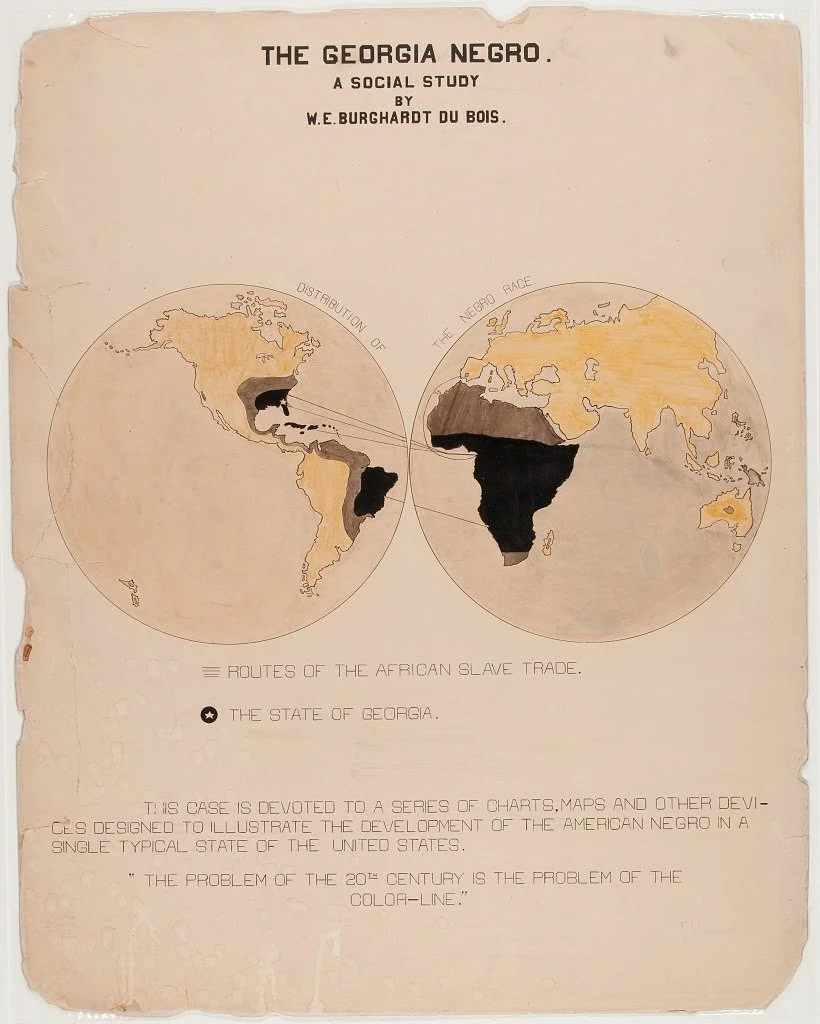
Below we discuss one of the best historical examples of illustration for research engagement: W.E.B. Du Bois’s hand-drawn infographics which were on display at the Paris Exposition at the turn of the 20th Century. The infographics are so powerful they almost made us tone down our dogmatic belief in comics. Read on for details…
Ready to tell us about your project?
If you want to reach people outside of your academic community, you have a few options on the table.
Podcasting has grown by leaps and bounds over the past decade. It’s a fantastic way to raise your profile.
Because most podcasts are long form, they give you an opportunity to get into some of the details about your area of expertise. One good podcast episode and you can easily become the go to expert for your subject.
However…
In terms of engaging with research, one of the downsides of audio formats like podcasts—and it’s a BIG one—is the absence of a visual component.
Having something for an audience to SEE is a key factor in moving them from casual interest to engaged participants.
But the absence of a visual component is not the biggest downside to audio formats.
If you’re wanting to really bring people into the world of your research and have them stay a while, keep in mind that…
The BIGGEST weakness of the podcast is that it invites PASSIVE learning.
People listen to podcasts while they are cooking, driving, doing laundry, or walking their dogs.
And your audience cannot be as engaged with your work as they should be if they are multitasking.
Another option you might have considered for reaching non-experts is video content.
If YouTube Shorts, Instagram Reels, and TikTok have taught us anything over the past decade it is that…
People. Love. Videos.
When it comes to learning and sharing interesting tidbits of information, video is tough to beat. Also, unlike audio, video allows you as a researcher to provide a visual component.
Video empowers you to both show and tell audiences about your research. It also empowers viewers to show and tell others about your research.
While video does have its advantages, YouTube Shorts, Instagram Reels, and TikTok have also taught us that users tend to watch hundreds of videos in rapid succession. They might find what you have to say interesting. But these platforms are designed for infinite scrolling, not deep engagement.
And just like audio…
The BIGGEST weakness of video content is that it encourages PASSIVE learning.
You can build an audience of hundreds—even thousands—of followers with things like podcasting and creating video content. But we believe that ONE engaged fan of your research is worth more than 1,000 passive followers who only occasionally glance at the content you carefully put together.
This is why we believe ILLUSTRATION is so important.
Illustration compels non-experts to engage with your research in a way that audio, video, and even photographic images do not.
Illustration—more than audio and video—forces your audience to take an active role in seeing, analyzing, and interpreting your research.
In other words, your audience will have to break things down and put them back together.
In short, with illustration, your audience MUST be actively engaged to participate. They must hit the pause button on their world…and walk into the world of your research.
Ready to tell us about your project?
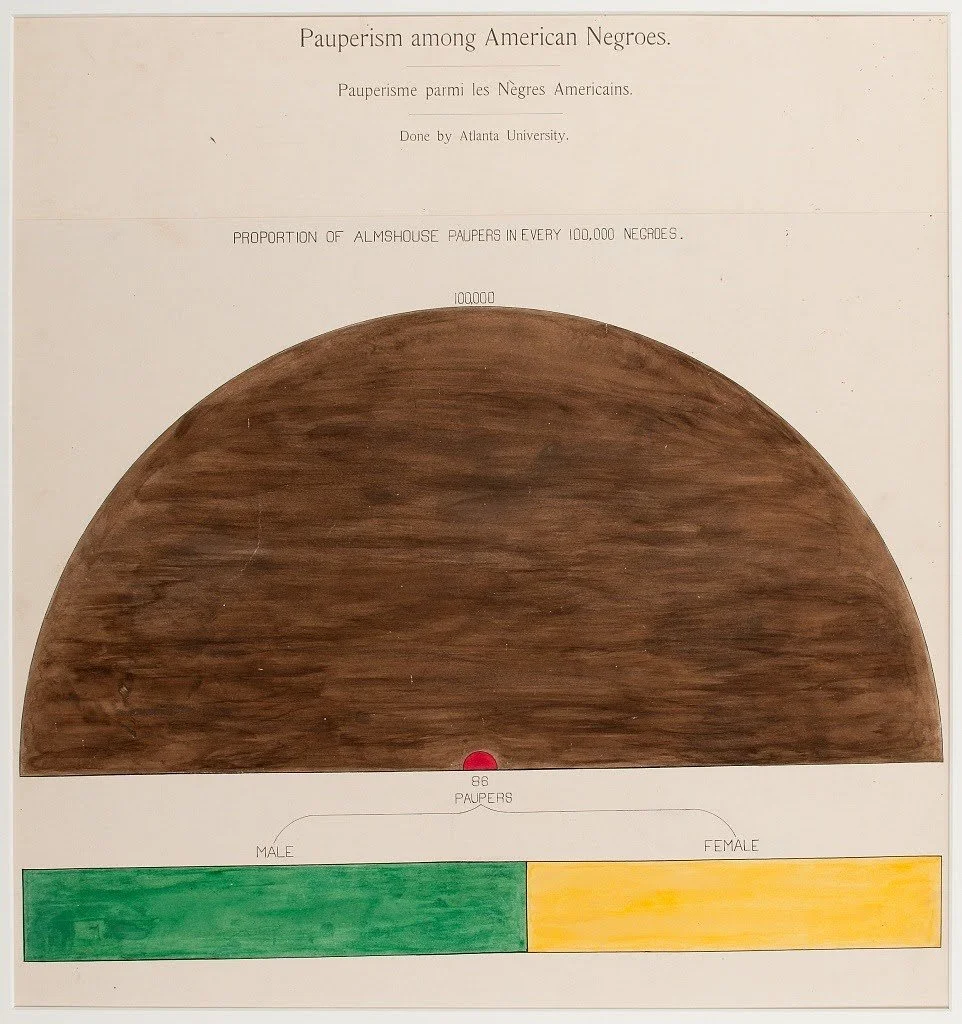
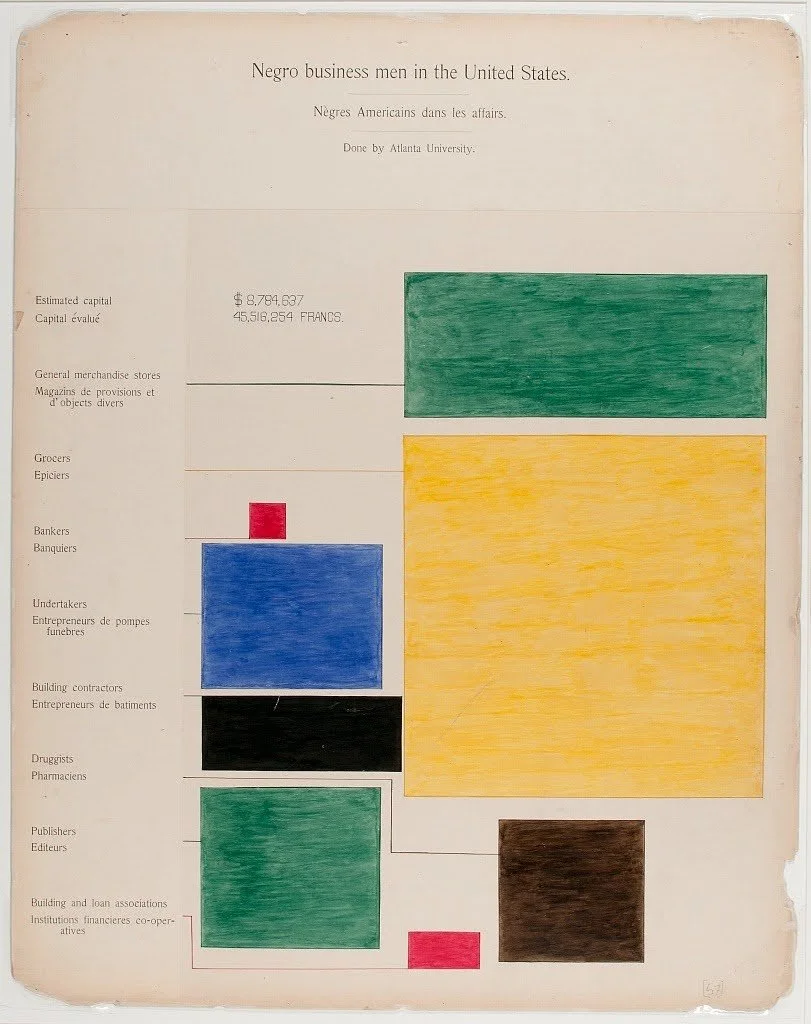
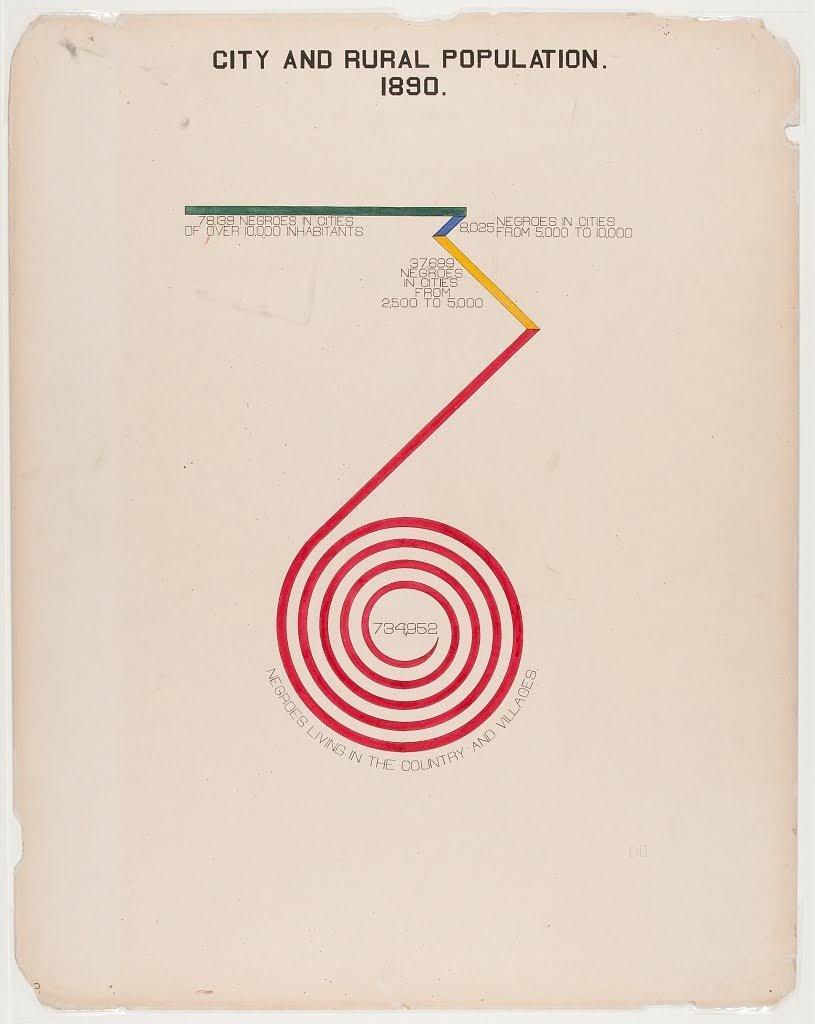
One of the best examples of illustration for research engagement was created over a century ago. . .
Before ChatGPT, before Canva, even before Microsoft Paint, African American sociologist W.E.B. Du Bois created mesmerizing, hand-drawn infographics that he presented at the 1900 Paris Exposition. These data visualizations used different colors and shapes to graphically demonstrate the progress African Americans made after Emancipation.
Even today, it is nearly impossible to look away from these data-dense works of art! They do a fantastic job of drawing you into the world of Du Bois’s research.
They draw you in while simultaneously forcing you to study them and make sense out of the information and Du Bois’s overall argument.
Illustration helped Du Bois take an abstract idea like “progress” and creatively communicate it in more concrete terms.
As compelling as these Du Bois pieces are, infographics are just ONE example of illustration for research engagement.
Other examples of illustration include flow charts, graphs, tables, diagrams, 3D models, maps, timelines, animation, heat maps, and others.
At LP Engage, we not only believe that illustration can transform passive learners into engaged readers who enter the world of your research and refuse to leave…
More than anything, we believe that comics are the MOST EFFECTIVE form of illustration for research engagement.
We are the closest thing to comics purists that you might ever find. We believe in the power of comics the way a Jedi believes in the power of the Force.
And no, it’s NOT because we see comics as a way to simplify, dilute, or “dumb down” your research for public consumption. . .
And no, it’s NOT just because—as most science communications experts say—”People like stories” or “You need to appeal to people’s emotions.”
It’s deeper than that for us. Much deeper.
We have stepped into the world of comics the same way we want people who engage your research to step into your world. The only way we’re leaving is if someone kicks us out!
We have MANY reasons why we believe comics are the most effective form of illustration for research engagement. We’re not shy about this. At all.
We want to share these reasons with you.
But first we want to hear from you…